
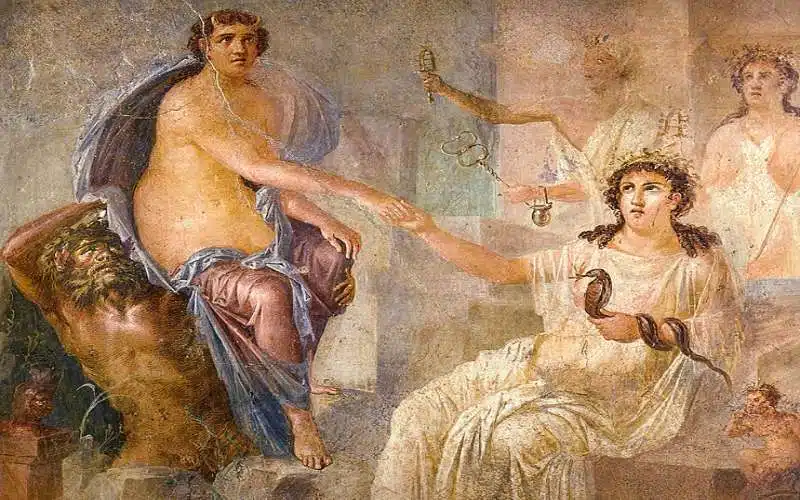
Isis, the Egyptian goddess of rebirth, remains one of the most familiar images of empowered feminine integrity. The goddess Isis was the first daughter of Geb, god of the Earth, and Nut, the goddess of the Overarching Sky. Isis was born on the first day between the first years of creation and was adored by her human followers.
Unlike the other Egyptian goddesses, Isis spent time among her people, teaching women how to grind corn and make bread, spin flax, and weave cloth. She also taught them how to tame men enough to live with them (an art form on which many of us would welcome a refresher course!)
Isis taught her people the skills of reading and agriculture and was worshipped as the goddess of medicine and wisdom.
Isis embodied the characteristics of all the lesser Egyptian goddesses that preceded her and became the model on which many other female deities in other cultures were based. As the personification of the “complete female,” Isis was called “The One Who Is All,” Isis Panthea (“Isis the All Goddess”), and the “Lady of Ten Thousand Names.”
Isis shares many of the same characteristics as Hathor, the Egyptian goddess of Love and Fertility, but they are still two distinctly different goddesses. Outside of the Egyptian pantheon, Isis have a number of similarities with the Norse goddess Freyja.
Isis and Ra
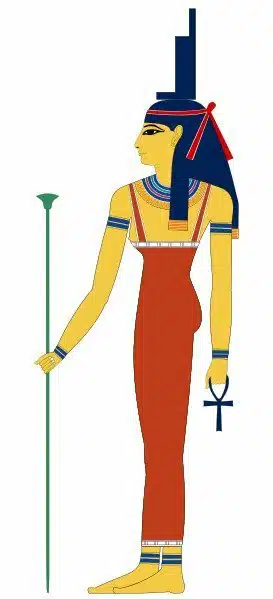
The goddess Isis, a moon goddess, gave birth to Horus, the god of the sun. Together, Isis and Horus created and sustained all life and were the saviors of their people. Her story goes:
Isis, through courageous cunning, became the most powerful of the gods and goddesses in the ancient world by tricking Ra, the God of the Sun, who originally had the greatest power. Ra was uncaring and could be brutal, and the people of the world suffered greatly during his reign.
The goddess Isis tricked him by mixing some of his salivae with mud to create a poisonous snake that bit him. This caused him great suffering, which she then offered to cure, and he eventually agreed.
Isis informed Ra that, for the cure to work, she would have to speak his secret name (which was the source of his power over life and death). Reluctantly, he whispered it to her. When Isis uttered his secret name while performing her magic, Ra was healed.
But the goddess Isis then possessed his powers of life and death and quickly became the most powerful of the Egyptian gods and goddesses, using her great powers to the benefit of the people.
Isis and Osiris
Isis was called the Mother of Life, but she was also known as the Crone of Death. Her immense powers earned her the titles of “The Giver of Life” and “Goddess of Magic.” Her best-known story illustrates why she is simultaneously known as a creation goddess and a goddess of destruction:
Isis was the Goddess of the Earth in ancient Egypt and loved her brother Osiris. When they married, Osiris became the first King of Earth. Their brother Set, immensely jealous of their powers, murdered Osiris so he could usurp the throne.
Osiris’ Death
Set tricked Osiris into stepping into a beautiful box made of cedar, ebony, and ivory that was intentionally built to trap Osiris. When Osiris stepped into the box, Set sealed it up and threw it into the river.
The river carried the box out to sea, and it washed up in a distant country, resting in a tamarisk tree when the waters receded. As time passed, tree branches covered the box, entombing the god into the tree trunk.
In a state of inconsolable grief, Isis tore her robes to shreds and cut off her beautiful black hair. When she regained her emotional balance, Isis set out to search for the body of Osiris so that she might bury him properly. The search took Isis to Phoenicia, where she met Queen Astarte. She in turn didn’t recognize the goddess and hired Isis as a nursemaid to her infant prince.
Fond of the young boy, Isis decided to bestow immortality on him. As she was holding the royal infant over the fire as part of the ritual, the Queen entered the room. Seeing her son smoldering in the middle of the fire, Astarte instinctively (but naively) grabbed the child out of the flames, undoing the magic of Isis that would have made her son a god.
When the Queen demanded an explanation, Isis revealed her identity and told Astarte of her quest to recover her husband’s body. As she listened to the story, Astarte realized that the body was hidden in the fragrant tree in the center of the palace and told Isis where to find it.
Sheltering his broken body in her arms, the goddess Isis carried the body of Osiris back to Egypt for proper burial. There she hid it in the swamps on the delta of the Nile river.
Osiris Dies Once Again
Unfortunately, Set came across the box one night when he was out hunting. Infuriated by this turn of events and determined not to be outdone, he murdered Osiris once again, this time hacking his body into 14 pieces and throwing them in different directions, knowing that they would be eaten by the crocodiles.
The goddess Isis searched and searched, accompanied by seven scorpions who assisted and protected her. Each time she found new pieces of her beloved, she rejoined them to re-form his body.
But Isis could only recover thirteen of the pieces. The fourteenth, his penis, had been swallowed by a crab, so she fashioned one from gold and wax. Then inventing the rites of embalming and speaking some words of magic, Isis brought her husband back to life.
The Birth of Horus
Magically, Isis then conceived a child with Osiris and gave birth to Horus, who later became the Sun God. Assured that having the infant would now relieve Isis’ grief, Osiris was free to descend to become the King of the Underworld, ruling over the dead and the sleeping.
His spirit, however, frequently returned to Isis and the young Horus, who both remained under his watchful and loving eye.
There are many other variations of this myth. In some, Isis found the body of Osiris in Byblos and fashioned his penis out of clay. In others, the goddess consumed the dismembered parts she found and brought Osiris back to life in her own body. Reincarnating him as her son Horus. One of the most beautiful renditions is when Isis turns into a sparrow-hawk . Hovering over the body of Osiris, fanning life back into him with her long, magical wings.
Regardless of the differences, each version speaks of the power over life and death that the goddess Isis symbolizes and the deep mysteries of the feminine ability to create and bring life from that which is lifeless.
Celebrating Isis and Her Impact on Other Religions
The festivities surrounding the flooding of the Nile each year, originally named “The Night of the Tear-Drop,” were in remembrance of Isis’ deep lamentation of the death of her beloved Osiris. Her tears were so plentiful that they caused the Nile to overflow. This seasonal flooding is now celebrated annually by Egyptian Muslims and is called “The Night of the Drop.”
Christianity and Isis
The Egyptian goddess Isis played an important role in the development of modern religions. Although her influence has been largely forgotten. She was worshipped throughout the Greco-Roman world for centuries. During the fourth century Christianity was making its foothold in the Roman Empire,. Then her worshippers founded the first Madonna cults in order to keep her influence alive.
Some early Christians even called themselves Pastophori, meaning the shepherds or servants of Isis,. This might be where the word “pastors” originated. The influence of Isis can still be seen in the Christian images and icons of the faithful wife and loving mother.
Indeed, the ancient images of Isis nursing the infant Horus inspired the style of portraits of mother and child for centuries, including those of the “Madonna and Child” found in religious art.
The Portrayal of Isis
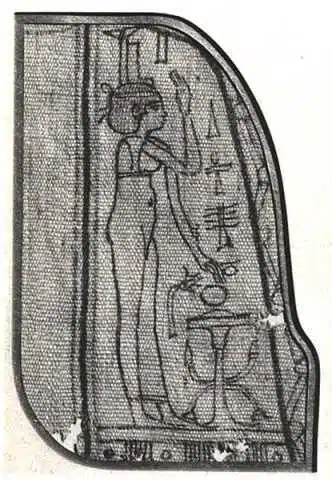
She was often portrayed with winged arms outstretched in a protective position in her role as a guide to the Underworld. The image of the wings of Isis was incorporated into the Egyptian throne on which the pharaohs would sit. The wings of Isis protecting them.
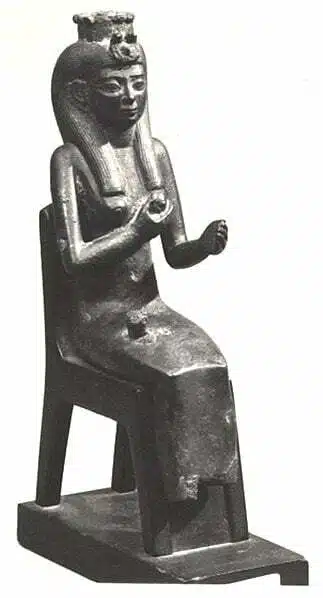
A throne was one of her common symbols. She was known as the supreme king-maker. Often depicted in the temples along the Nile with a throne balanced on her head. Her son, Horus, was the patron and protector of the pharaohs. The reigning Pharaoh was considered to be the living embodiment of Horus and who became Osiris once he died.
At times she could be a clever trickster, empowered by her feminine wiles rather than logic or brute strength. Isis shows us how we can use our personal gifts to create the life we desire. Instead of simply opposing that which we do not like.
Legacy
Isis has many gifts to share with modern women. She embodies the greatest strengths of the divine feminine. The capacity to feel deeply and passionately in relationships, the miraculous power of creation, and the awe-inspiring ability to supply sustenance and protection.
The myths of Isis and Osiris remind us of the need for occasional renewal and reconnection in our relationships. And the importance of acknowledging and accepting the depths of our emotions. Both pleasant and unpleasant emotions nurture the movement of Life through the little deaths of change and growth.

“Have you tried the Goddess Quiz yet? Are you an Artemis goddess archetype, or maybe you are more like Demeter? Find out now!”
Isis Symbols
The goddess Isis is often represented by symbols associated with her distinctly feminine but courageous and persevering nature or with her association with death and resurrection.
It is hardly surprising that many of our icons representing feminine strength and passionate emotions, including the image of Madonna and Child in works of art, are derived from the ancient goddess symbols of the Egyptian goddess Isis.
General
The moon was always associated with femininity and fertility. As such it is no wonder that the full moon works so well as a symbol for Isis. Just like the moon goes through different phases, Isis transforms from a maiden to a mother and, finally, to an old woman.
Her other symbols are the madonna and child, river and ocean, hair braid, cattail, papyrus, knot and buckle, star, the ankh symbol, throne, the rattle, diadem headdress, cow, wings, milk, perfume bottle, and March 5 (Feast Day).
Animals
In one of the numerous legends about Isis, when her beloved Osiris was murdered, Isis turned into a sparrowhawk and hovered over Osiris’ body, fanning the life back into him with her magical wings. As a result, the sparrowhawk is often seen as the symbol of Isis.
Her other animal symbols are kite, crocodile, scorpion, crab, snake (especially cobra), and goose.
Plants
According to the legend, Osiris was murdered and placed into the sarcophagus. He then floated down the Nile River until his sarcophagus got stuck in the cedar tree. Later on, this tree, along with the sarcophagus, was used to build a central pillar for the palace of the King of Byblos.
In another version, the tamarisk tree was instead of cedar. However in both versions, Isis found the tree and retrieved the body of her beloved Osiris. For this reason, cedar and tamarisk trees remain to be the symbols of Isis and her unconditional love for Osiris.
Since Isis was the goddess of fertility, she was often associated with corn, flax, wheat, barley, grape, lotus, balsam, all flowers, trees, and all green plants.
Perfumes/Scents
Tamarisk trees blossom in the spring, and everyone who has a chance to smell these flowers is enchanted. Due to this tree’s connection with the Isis legends and its beautiful fragrance, it is a perfect symbol of this goddess.
Other perfume symbols of Isis are lotus, balsam, amber oil, cedarwood, sandalwood, cinnamon, and sweet orange.
Gems and Metals
When it comes to gemstones, crystals, and precious metals, silver is probably the best choice for Isis’ symbol. This is because it is closely connected to the moon, which is another symbol of this goddess.
Isis’ other symbols are gold, ebony, ivory, obsidian, lapis lazuli, and scarabs.
Colors
The color yellow symbolizes everything that’s eternal and imperishable, and ancient Egyptians believed that their gods had flesh of yellow-gold color. With that in mind, it is easy to see why is the color yellow such a great symbol for Isis.
Other colors that symbolize Isis are silver, gold, black, red, cobalt blue, and green.
Goddess Jewelry
There are many reasons why you might want to keep a healing crystal or stone close to you. Getting closer to your goddess by wearing her color or crystal is a great one. That they also look great as jewelry only makes it so much better!
Here is a guide to crystal jewelry you hopefully will find helpful. In it is a list of 30+ crystals and links to some really great looking jewelry with that crystal or stone. Enjoy!
Discovering the Mysteries of Isis: Recognizing Her Presence and Fostering a Sacred Connection
Have you experienced an affinity for ancient Egyptian culture, magic, and healing? For many spiritual seekers, the goddess Isis might be beckoning you to connect. Learn to recognize the signs of her invitation, invoke her presence, and nurture a meaningful relationship with this powerful Egyptian deity.
How to know if Isis is calling you
One way to discern Isis’ call is through dreams and symbols. Pay attention to dreams featuring her, her symbols, or ancient Egyptian motifs. Similarly, notice any recurring symbols, such as the ankh, wings, or her throne, as they might indicate her presence.
Moreover, monitor your emotional state. Feelings of maternal love, healing, or a desire to explore the mysteries of life could be signs of Isis’ call. These emotions may seem ordinary, but they’re worth considering.
Invoking Isis
To invoke Isis, choose a quiet space adorned with her symbols, such as the ankh, the winged disk, or images of her. This helps create a connection with the goddess.
During your ritual, light candles, especially blue or gold, symbolizing her royalty and divinity. Offer tokens of devotion, like flowers, incense, or written intentions, expressing your respect and dedication to her.
In meditation, concentrate on your breath and clear your thoughts. Envision Isis, her symbols, and the energy she represents. Silently ask for her guidance and be receptive to any insights that may emerge.
Signs that Isis is present
Identifying when Isis is with you is crucial to deepening your bond with her. The goddess often reveals her presence in various forms, from emotional sensations to visual cues. Here are six signs to help you recognize when Isis is near:
- Emotional sensations: Feelings of love, healing, or spiritual awakening can signify her presence.
- Physical reactions: Sudden warmth, tingling sensations, or goosebumps may hint she’s near.
- Visual cues: Glimpses of gold light, shadows shifting, or sightings of her symbols can be signs.
- Auditory cues: Hearing whispers, rustling fabric, or distant music might suggest her presence.
- Synchronicities: Repeated encounters with Egyptian symbols or a strong pull toward her mythology can be a signal.
- Intuitive connection: An unexplained sense that Isis is with you can be a sign of her presence.
Fostering a relationship with Isis
To cultivate a deeper bond with Isis, establish a regular practice of meditation, prayer, or ritual in her honor. Present consistent offerings, such as during the new moon, to demonstrate your commitment to the goddess.
Embody her values by nurturing love, compassion, and healing in your life. Honor the mysteries of life and death, as these aspects are central to her essence. Aligning your life with her teachings will help strengthen your connection to her.
Finally, study her mythology and history. Read about Isis and her role in Egyptian mythology, and connect with others who share your interest. By exchanging insights and experiences, you’ll gain a richer understanding of the goddess and solidify your bond with her.
Meditations To Invoke The Goddess Isis
- Encircle me with your strong and powerful wings and breathe life into all my efforts.
- Guide me, Isis, to set aside my responsibilities for just a while in order to make time for someone who is really important to me.
- Great Isis, heal my heart and set me free.
- Lend me your great wisdom, Isis, when I think about what I really want in my life.
- Make me strong enough to fight for what I want, not just tolerate what life has thrown in my path.
- Help me know who I am and what I need to be fulfilled.
- Spread your wings of protection over us during these challenging times when the forces of war, violence, and oppression are running wild.
- Isis, remind me to stop my busyness to take time to teach and comfort others.
- Bless and protect those that offer their lives to help and protect us – Firemen, police, and other unsung heroes of all kinds.
- Remind me that, like you, I, too, have the power to be a healing force as well as the capacity to heal myself.
- Remind me that, even when I am separated from those that I love, we can still be together.
- Isis, help me to listen to my inner voice and to act decisively on the advice that it gives me.
- Make me more concerned and considerate of myself. Help me to consider my own feelings and needs, not always placing others first.
- She of ten thousand names, protect me in ten thousand ways.
- Isis, place your great shield in front of me and help me to proceed with my plans, unafraid.
- Protect me, Isis, from those who would take advantage of my good nature.
Other Goddesses
We hope you enjoyed this post. Be sure to check out some of the other goddesses we also write about. You can find the complete list of goddesses sorted across regions and religions here.
Featured Image Credit: WolfgangRieger, Public domain, via Wikimedia Commons


