
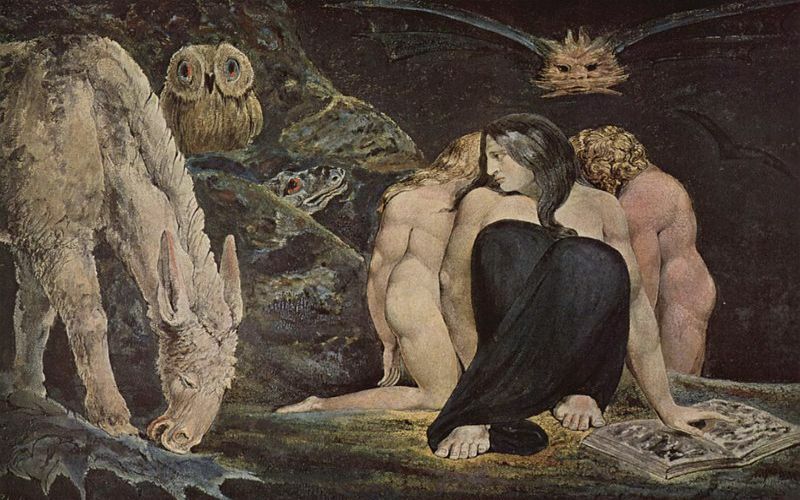
Hecate is one of the Greek goddesses, daughter of the TItan god Perses. Goddess of the three paths, guardian of the household, protector of everything newly born, and the goddess of witchcraft. She was once a widely revered and influential goddess, but her reputation has been tarnished over the centuries.
In current times, she is usually depicted as a “hag” or old witch stirring the cauldron. Nothing could be further from the true image of Hecate’s original glory.
Hecate Origins
A beautiful and powerful goddess in her own right, the Greek goddess Hecate was the only one of the ancient Titans who Zeus allowed to retain her authority once the Olympians seized control. Zeus shared, only with her, the awesome power of giving or withholding from humanity anything she desired.
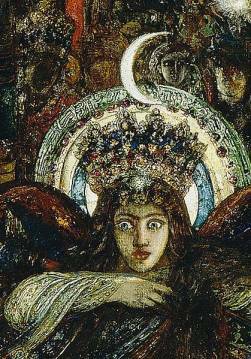
Usually classified as a “moon goddess,” her kingdoms were actually three-fold; the earth, sea, and sky. Having the power to create or withhold storms undoubtedly played a role in making her the goddess who was the protector of shepherds and sailors.
A lover of solitude, Hecate, like her cousin Artemis, was a “virgin” goddess. She was unwilling to sacrifice her independent nature for the sake of marriage. Walking the roads at night or visiting cemeteries during the dark phase of the moon, the goddess Hecate was described as shining or luminous.
The Depiction Of Hecate
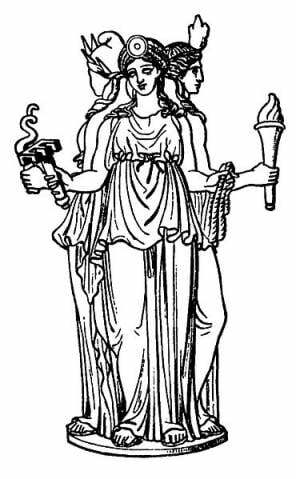
In many of her legends, she is invisible, perhaps only glimpsed as a light, a “will-o-the-wisp.” Perhaps it was this luminous quality that marked Hecate as a “moon goddess.” Some scholars believe it might be because her mother was Asteria (the Titan goddess of the Shining Light or “Star”), or perhaps it was because she always carried a torch on her journeys.
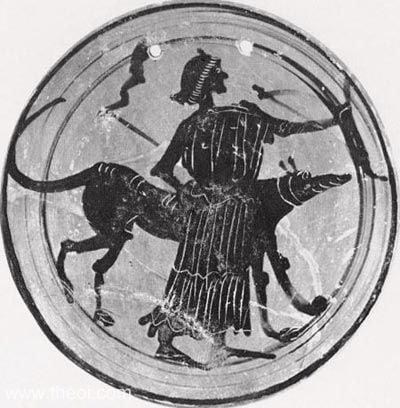
Like Artemis, Hecate was usually depicted with her sacred dogs. Hecate and even her animals were sometimes said to have three heads that could see in all directions. Although she is most often depicted as a beautiful woman with three human heads, some images of her are fearsome (one with a snake’s head, one with a horse’s, and the third with a boar’s head).
Hecate’s Gifts
She is gifted with farsightedness, the ability to see in several directions at once (even the past, present, and future). This talent featured largely in her most famous myth, the abduction of Persephone. For it was the goddess Hecate who could see what had become of her and inform her frantic mother, Demeter.
The goddess Hecate continued to play an important role in the life of Persephone, becoming her confidante when she was in the Underworld. Thankful for their friendship, Hades was more than hospitable, honoring Hecate as a prominent and permanent guest in the spirit world.
This had the effect of enhancing her reputation as a spirit of black magic with the power to conjure up dreams, prophecies, and phantoms. Hecate’s ability to see into the Underworld, the “otherworld” of the sleeping and the dead, made her comfortable and tolerant in the company of those who most would shun out of fear or misunderstanding.
Queen Of The Night
In her role as “Queen of the Night,” she sometimes traveled with a following of “ghosts” and other social outcasts. She was both honored and feared as the protectress of the oppressed and of those who lived “on the edge.” In Rome, many of the priests in her sacred groves were former slaves, released to work in her service.
The goddess Hecate was often accompanied on her travels by an owl, a symbol of wisdom. Not really known as a goddess of wisdom, per se, Hecate is nevertheless recognized for a special type of knowledge. A little odd maybe she is considered to be the goddess of trivia.
The Goddess Of Hidden Knowledge
Hecate’s farsightedness and attention to detail, combined with her extraordinary interest in that which most of us discount as irrelevant or arcane, gave her tremendous powers. She knew what the rest of us did not.
Not surprisingly, the people thought it best to give the goddess Hecate (and any friends that might be accompanying her) a lot of honor and a fairly wide berth. When darkness descended, they wisely retired to the fireside for supper but put the leftovers outside as an offering to Hecate and her hounds.
The homeless and destitute were often the actual beneficiaries, but that hardly mattered, for they were, after all, under Hecate’s protection. Similarly, food was often left at the crossroads to honor Hecate, especially at junctions where three roads converged – what we often call a “Y-intersection”.
The Protector
Frequently a pole was erected at the intersection, and three masks would be hung from it to pay homage to Hecate and to request her guidance in helping to choose the right direction. Often, three-faced masks also adorned the entrances of many homes, honoring the goddess Hecate, who could wield her influence over “the spirits that traveled the earth” and keep them from entering the household.
It is hardly surprising that a woman who needed to make a trip alone at night would say a brief prayer to Hecate to seek her protection. The goddess Hecate, like her cousin Artemis, was known as a protector of women, especially during childbirth. Not only was Hecate called upon to ease the pains and progress of a woman’s labor, but especially to protect and restore the health and growth of a child.
The Friend of Dying Ones
Similarly, Hecate played a role that we would now describe as a “hospice nurse”. Helping the elderly make a smooth and painless passage into the next life. She would stay with them as long as needed in the otherworld to help prepare them for their eventual return to the earth in their next life.
Familiar with the process of death and dying and that of new birth and new life, the goddess Hecate was wise in all of earth’s mysteries. She reminds us of the importance of change, helping us to release the past, especially those things that are hindering our growth.
Hecate’s Significance for Witches All Over The World
In almost every culture in the world, people believed in shamanism, magic, and witchcraft as a way to interact with unseen forces. Hecate is the goddess of witchcraft, so it makes no wonder that we can see traces of her in many other religions and cultures.
For example, even the Vikings practiced magic and witchcraft. They called it Seidr, and it was just as important as praying to Odin and Thor. This is only one example – it seems that no matter which god(s) we believe in, we still want to connect with nature and the universe through other channels as well.
After all, when we pray to the gods to make our wishes come true, we are just passive observers of our own lives. However, with Hecate and witchcraft, we take things into our own hands.
Lessons Taught By Hecate
Hecate helps us accept and even welcome change and transition. She sometimes asks us to let go of what is familiar, safe, and secure and to courageously travel into the scary places of the soul.
New beginnings, whether spiritual or mundane, aren’t always easy. But Hecate is there to support you and show you the way. She loans her farsightedness for you to see what lies deeply forgotten or even hidden and then helps you make a choice and find your path. Often, she shines her torch to guide you while you are in dreams or meditation.
Hecate teaches us to be just and to be tolerant of those who are different or less fortunate. Yet she is hardly a “bleeding heart,” for Hecate dispenses justice “blindly” and equally.
Whether the Greek goddess Hecate visits us in waking hours or only while we sleep, she can lead us to see things differently (ourselves included) and help us find a greater understanding of ourselves and others.
Although her name may mean “The Distant One,” Hecate is always close at hand in times of need. She is helping us to release the old, familiar ways and find our way through and into new beginnings.
“Have you tried the Goddess Quiz yet? Are you an Artemis goddess archetype, or maybe you are more like Demeter? Find out now!”
Hecate Symbols
Hecate, the Greek goddess of the Crossroads (known as “the Distant One”), is often represented by symbols associated with her personality traits and her role as Queen of the Night. Since Hecate is the goddess of witchcraft, it should be no surprise that many of her goddess symbols play a prominent role in celebrating Halloween.
General
Since Hecate was a goddess of the crossroads, it makes no wonder that the crossroads are one of her main symbols. Crossroads usually symbolize a choice, but they can also symbolize the past, present, and future. Hecate could see all three of them, and this is why crossroads are her perfect symbol.
Anther symbols that can represent Hecate are torch, dark moon, raisin & currant cakes, three-headed animals or statues, the number 3, masks, and candles.
Animals
Hecate was often depicted in the company of owls. It is well-known that owls are symbols of wisdom, and even though Hecate wasn’t considered the goddess of wisdom, she still possessed useful knowledge about the things that were, the things that are, and the things that will be.
Her other animal symbols are dogs, horses, sheep (especially black female lambs), bats, snakes, and boars.
Plants
Willows are trees with rich symbolism. They represent adaptability, change, growth, new beginnings, hope, and survival. As a goddess of crossroads, Hecate is also associated with change and new beginnings, and that’s why willows are great symbols for her.
Other plant symbols of Hecate are dark yew, blackthorn, groves of trees, saffron, raisins and currants, any night-blooming plants, and gourds (especially pumpkins).
Perfumes/Scents
Since Hecate was dubbed as the Queen of the Night, the best perfume to symbolize her bears the same name: Queen of the Night. This is a light flowery fragrance that perfectly captures Hecate’s mysterious essence.
Other scents that can symbolize Hecate are cinnamon, myrrh, mugwort, honey, lime, and lemon verbena.
Gems and Metals
Sapphire, silver, gold, moonstone, black tourmaline, black onyx, hematite, smoky quartz, and any stone that is dark or luminous will be a great symbol of Hecate.
Colors
Black is definitely a Hecate’s color, as it is often associated with the darkness and the night, and this is where Hecate thrives. However, Hecate is also associated with orange, yellow-orange, and red-orange.
Jewelry
Want to bring Hecate even closer to you? Why don’t you do it through some crystal jewelry? Here you can find some cool pieces that will help you connect to Hecate on a deeper level by wearing crystals associated with her.
You can find excellent jewelry pieces with gemstones that symbolize this goddess. Apart from that, this jewelry will make even the most common outfits more fun!
Embracing the Call of Hecate: Recognizing Her Presence and Cultivating a Sacred Connection
Have you ever felt an affinity for the moon, the crossroads, or the mysterious aspects of life and wondered if there’s more to it? For many spiritual seekers, the goddess Hecate might be extending an invitation to connect. Explore how to recognize the signs of her calling, invoke her presence, and cultivate a meaningful relationship with this powerful Greek goddess.
How to know if Hecate is calling you?
One way to recognize Hecate’s call is through the moon and its phases. Encounters with lunar symbols or feelings of connection during the new or full moon may be signs. Keep an eye out for any animals associated with her, such as dogs or snakes, as Hecate often communicates through these creatures.
Dreams and visions are another way Hecate may reach out. Dreams featuring her or her symbols, like torches, keys, or crossroads, can be significant. Similarly, visions of moonlight or a mysterious atmosphere might signal her presence.
Finally, pay attention to synchronicities in your life. Repeated encounters with her symbols, or a strong attraction to her stories and mythology, can indicate that Hecate is calling you. These patterns may seem coincidental, but they’re worth noting.
Invoking Hecate
To call upon Hecate, start by selecting a location where you feel comfortable and connected to her energy, such as a crossroads or a quiet place under the moon. Incorporate her symbols, such as torches, keys, or images of her into your chosen area. This will help establish a connection with the goddess.
During your ritual, light candles, particularly black or dark purple, as they represent the night and her mysterious nature. Offer symbols of Hecate, such as pomegranates, incense, or even written intentions. These offerings demonstrate your dedication and respect for her.
In meditation, focus on your breath and clear your mind. Visualize Hecate, her symbols, and the energy she embodies. Quietly ask for her guidance, and be open to any insights that may arise during your meditation.
Signs that Hecate is present
Recognizing when Hecate is with you is essential to deepening your connection with her. The goddess often manifests her presence in various ways, from emotional sensations to visual cues. Here are six signs to help you identify when Hecate is near:
- Emotional sensations: Feelings of wisdom, transformation, or insight can indicate her presence.
- Physical reactions: Sudden chills, tingling sensations, or goosebumps may signal she’s near.
- Visual cues: Flashes of moonlight, shadows moving, or glimpses of her symbols can be signs.
- Auditory cues: Hearing whispers, howling dogs, or distant footsteps may suggest her presence.
- Nature occurrences: Unusual animal encounters, especially with dogs or snakes, can be a signal.
- Intuitive connection: A strong sense that Hecate is with you, even if you can’t pinpoint why, can be a sign of her presence.
Cultivating a relationship with Hecate
To build a deeper connection with Hecate, establish a consistent practice of meditation, prayer, or ritual to honor her. Make regular offerings, such as during the new moon or at crossroads, to demonstrate your commitment to the goddess.
Embrace her values by seeking wisdom and embracing personal transformation in your life. Protect and nurture the mysteries and magical aspects of life, as these are central to her being. Aligning your life with her, read about her and learn her mythology.
Hecate Meditations
- Hecate, let me be like you and take care of the world while remembering to take care of myself!
- Great goddess, help me celebrate my sensitive and feminine power today.
- Help me learn to accept constructive criticism so that I may continuously grow toward my ideals.
- Thank you, Hecate, for helping me to be sensitive, imaginative, and creative today.
- Great goddess, I join you in taking delight in being of service and finding ideal ways to help others.
- Hecate, show me how to balance my ideals with the realities of day-to-day living.
- I call on you, Hecate, to help me recharge myself by protecting my need for space and time alone.
- Hecate, help me celebrate my altruistic nature today.
- Goddess, help me see the love and connectedness that can soften even the most hardened heart.
- Goddess, I reaffirm that I am a warm and sensitive being.
- Goddess, guide me to friends who add depth and connectedness to my life.
- Hecate, help me be decisive, determined, and passionate in my endeavors today.
- Goddess, teach me to take confident and firm steps toward accomplishing my daily goals.
- Great goddess, help me celebrate the powers of my femininity today.
- Hecate, help me to always act on my convictions and stay true to myself.
- Hecate, help me to be the champion of authenticity, especially for myself.
- Help me, goddess, to find the depth in my relationships.
- Goddess, remind me that I can have patience for the routine work involved in maintaining deep connections with others.
Want To bring More Hecate Qualities Into Your Life?
- Combine your vivid imagination with your strong compassion for others to come up with ingeniously creative solutions to challenges.
- Be decisive and passionately determined. Follow through on ideas and projects that you truly believe in with conviction, willpower, and good planning.
- Keep a dream journal. Practice being aware of the information that comes to you from the unconscious realms. Especially when deciding on a direction to take. The gift of seeing from many angles helps to get clarity and make choices with greater wisdom.
- Spend some quality time outdoors in the dark of the moon. Notice the richness and intensity of feeling, being held by the velvety darkness, the thrill, and the fear. Center your awareness in the sense of vastness, where all forms are mere imaginings or memories. Sense the possibilities in this fertile obscurity.
- What needs to die in order for new life to blossom? When you dream of something new, you will have to make room for it by letting go of anything that does not support its existence. This requires sacrifice, like how the independence of the maiden is surrendered in order for the connectedness of the mother to reign before it is retired so the crone may share her compassionate wisdom.
- Commit to helping the homeless and disenfranchised, those under the protection of Hecate. Whatever you can give to those who struggle in the darker edges of our cultures has great value to the heart and health of our human family. Help others to find an effective way to thrive and share the gifts they have to offer, we all benefit.
Other Goddesses
If you enjoyed this post we are sure you will enjoy getting to know some of the other goddesses we also write about. You can find the complete list of goddesses sorted across regions and religions here.
Featured Image Credit: William Blake, Public domain, via Wikimedia Commons

.jpg)

.jpg)
