
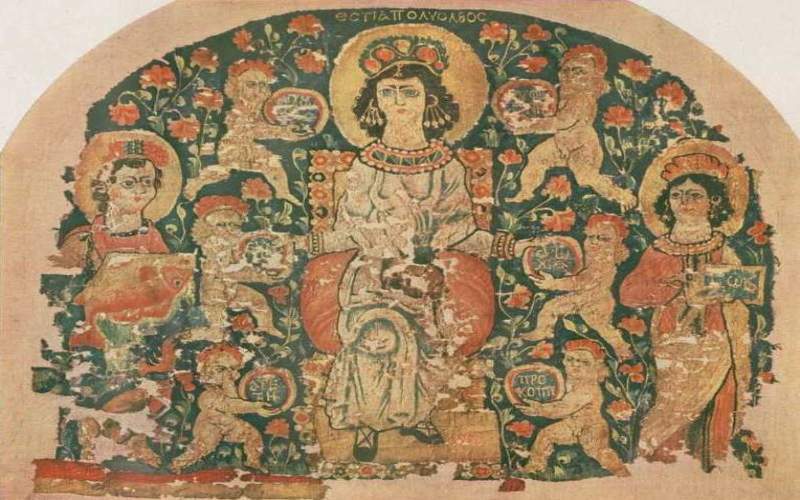
Hestia, the Greek Olympian Goddess of the sacred fire, was once known as “Chief of the Goddesses” and “Hestia, First and Last”. She was among the most influential and widely revered of the Greek goddesses.
Though the goddess Hestia was once the most important of the Greek goddesses, she (like her counterpart, the Roman goddess Vesta) is virtually unknown today. Her name means “the essence,” the true nature of things.
A Goddess That Appreciated Her Peace
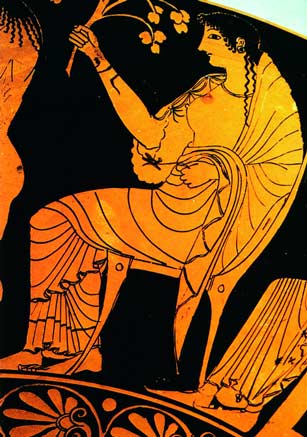
Scholars often refer to the goddess Hestia as “the forgotten goddess.” Because of her association with hospitality, the word Hestia can mostly be heard today used in the names of inns and restaurants, making some people wonder if “Hestia” is the name of a franchise.
Unlike the other Greek goddesses like Athena or Demeter, Hestia does not have a “story”; she simply “is.” Additionally, only a few images of the goddess Hestia exist. As she was a very “private person,” her symbols: the sacred flame and the circle, are usually used to represent Hestia in works of art.
Hestia’s brief stories, retold here, are however too scanty to instruct us. It is her traits, not her actions that most define her. These virtues define the goddess Hestia: mild, gentle, forgiving, peaceful, serene, dignified, calm, secure, stable, welcoming, and, above all else, well-centered.
Hestia’s History
Of all the Olympian gods and goddesses, Hestia was born first. And also the last.
Her parents were the Titans, Cronus and Rhea. She was their first child, but Cronus, made fearful by a prophecy that one of his children would grow up to usurp his throne, quickly swallowed the infant Hestia (as he did the brothers and sisters that followed) in order to prevent the fulfillment of the prophecy.
Later, following the birth of Zeus, the grieving goddess Rhea tricked her husband into swallowing a rock wrapped in swaddling instead of the infant, causing him to vomit up all the babies he had swallowed. First in, Hestia was the last to be disgorged. Hence, the goddess was often called “Hestia, First and Last.”
The goddess Hestia grew in grace and beauty and soon caught the attention of the gods Apollo and Poseidon, who both sought her hand in marriage. But Hestia wasn’t having any of it and saying that Aphrodite’s ways (romance and marriage) were not her ways, she placed her hand on Zeus’ brow and swore an oath that she would not marry.
More than anything else, she wanted to follow a path that was true to her nature and of her own choosing.
A Choice To Lead An Untroubled Life
Hestia didn’t require the trappings of power or adventure (like Athena and Artemis, the other virgin, i.e., unmarried goddesses). She was perfectly content and fulfilled being “Aunt Hestia” and enjoyed being of service to her family and community.
Zeus, grateful that Hestia’s announcement had averted the possibility of war between the rival suitors, not only supported Hestia’s wish to remain single but decreed that Hestia’s name should be mentioned first in any prayer and she should receive the first portion of any sacrifice and be honored in the temples of each of the Olympian deities.
So delighted was he with Hestia’s decision that Zeus handed her the keys to the family home (Mount Olympus) and offered her the position of manager and, with it, the responsibility of running this vast estate while the rest of the gods and goddesses wandered about in the larger world having all sorts of adventures.
True to her nature, Hestia stayed at home, never leaving Mount Olympus, always there to welcome the others and enjoy their “homecomings.”
Hestia’s Duties
The goddess Hestia never involved herself in the fights and machinations of the other gods and goddesses, instead managing to stay above the fray.
Olympus Manager
Non-judgmental and forgiving, her “unconditional love” and calm acceptance inspired the love and trust of others in return. Dependable and caring, Hestia was always there for them, helping them manage their lives which were certainly more exciting than her own.
One of Hestia’s most important responsibilities as the estate manager was as “Keeper of the Reserves”. Seeing to it that all their clothing and equipment was in good repair and the pantry always full so there would be ample food and wine on hand when any of the gods and goddesses returned from their adventures.
As keeper of the key to all the supplies, Hestia efficiently managed the large household, pleasing all with her practical dependability.
The Protector Of Guests
One of the few myths of Hestia tells how the lustful Priapus attempted to rape her as she slept. As he approached her bed, a donkey (long since a symbol of lust) began to bray loudly, awakening the slumbering Hestia. Her screams awoke the other gods and goddesses and sent the embarrassed Priapus falling all over himself as he fled.
Hestia is also known as the originator of the concept of “sanctuary.” It was an offense to Hestia to refuse hospitality to a stranger. That those in need were to be sheltered and protected from ill-treatment was recognized by Hestia’s followers as a sacred obligation.
Special emphasis was placed on the requirement to not “take advantage” of a female guest, presumably as a result of Hestia’s experience with Priapus.
Hestia And Hermes – An Unlikely Friendship
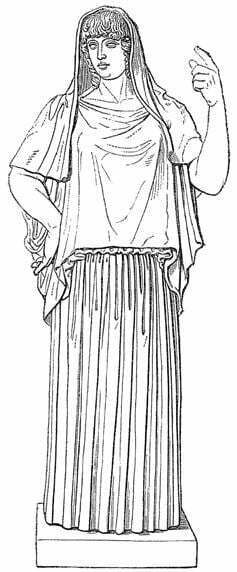
Hestia is often spoken of in conjunction with her friend and neighbor Hermes, the god of communication and travel. They were polar opposites in terms of personality—Hestia spoke little and stayed at home. Outgoing Hermes on the other hand had the “gift of gab” and traveled to the far ends of the world.
Though a marriage of such disparate characters clearly could not have succeeded, they shared strong bonds of friendship. They are remembered together in the Homeric Hymns (edited by H.G. Evelyn-White):
”…be favorable and help us you [Hermes] and Hestia, worshipful and dear. Come and dwell in this glorious house of friendship together, for you two, well-knowing the noble actions of men, aid their wisdom and strength.”
The Flame Of Hestia
The circle symbolized Hestia (as well as her counterpart, the Roman Goddess Vesta) as the “complete” goddess. The goddess who was whole, “one complete within herself”. Hestia was seen as not only psychologically “centered” but also as representing the center. As an extension she was the center of the home and family and the city as well as the world itself.
The source of Hestia’s sacred fire was believed to be the molten lava that burns at the center of the earth. According to myth it was connected by an “umbilical cord” called the Omphalos to the city of Delphi, a place of great wisdom as well as spiritual energy.
The town hall, a meeting place for citizens to discuss the community’s affairs (a forerunner of western democracy), was built around a hearth that honored Hestia.
The living flame of Hestia was tended constantly and never allowed to die out, for it represented the energy of all life and to let the flame extinguish was to invite a cold and barren existence. When new “subdivisions” were developed, the fire was carried from the town’s hearth to light the fire of the new community, assuring its prosperity.
The Olympic Torch is just one example of the living flame that has survived to modern times, though it is seldom recalled that it originally honored the Greek goddess Hestia.
Rituals Related To Hestia
The ritual of a bride and groom lighting a candle together from the flames of two candelabra to symbolize the creation of the “new” family from their two “old” families derived from the ancient practice of bringing Hestia’s flame from the bride’s mother’s home in order to assure Hestia’s blessing on the union.
Every home had a hearth that was dedicated to the goddess. Each day began and ended with a ritual by the hearth, requesting that she protect and nurture the family within.
As the Goddess of Architecture as well, Hestia intended that homes should be built from the center out, with the center being a hearth that contained her sacred flame.
As part of the naming ritual, all infants were carried in a circle around the altar of Hestia to secure her blessings. There was an altar to Hestia in the center of every home – it was the fireplace, the hearth, where the family gathered.
Hestia’s vision of a house was that it should truly be a home. A place where one’s body, spirit, and relationships would be nurtured and replenished. To be a place to “come home to” after exposure to the cold and chaos of the external world.
Legacy
Hestia is associated with the warmth and comfort of the welcoming fireplace. Just as the flames glowing from the hearth soothe us with their warmth and glowing light, the goddess Hestia also gives us security, peace, and comfort. She also helps us accept the truth of our lives with inner grace.
“Have you tried the Goddess Quiz yet? Are you an Artemis goddess archetype, or maybe you are more like Demeter? Find out now!”
Hestia Symbols
Hestia (also known as the Roman goddess Vesta) is often represented by goddess symbols associated with her personality traits, the sacred flame, and her contribution to civilization, personal households, and to architecture.
General
A hearth is one of the main symbols of Hestia since she was the goddess of home and sacred fire. As such, the hearth symbolizes warmth, security, protection, family, and home.
Hestia’s other symbols are architecture, bowls, veils, pantries, and keys.
Animals
Donkeys and pigs are one of the most useful animals in the household, and there is certainly a lot of symbolism related to those animals that can also be associated with Hestia.
For example, donkeys symbolize integrity, honesty, diligence, courage, and truth. Pigs, on the other hand, symbolize fertility and success in business and careers.
Plants
Plants and flowers that symbolize Hestia are the angel’s trumpet (Datura), hollyhock, purple coneflower, and yarrow.
Perfumes/Scents
Angelica’s root scent is musky, earthy, and warm, perfectly symbolizing Hestia’s essence. Her other associated scents and perfumes are iris, lavender, and peony.
Goddess Jewelry
There are many reasons why you might want to keep a healing crystal or stone close to you. Getting closer to your goddess by wearing her color or crystal is a great one. That they also look great as jewelry only makes it so much better!
Here is a guide to crystal jewelry you hopefully will find helpful. In it is a list of 30+ crystals and links to some really great looking jewelry with that crystal or stone. Enjoy!
Gems and Metals
Amethyst symbolizes purity, protection, wisdom, humility, and healing, all of those associated with Hestia. Other gems and metals symbolizing Hestia are garnet, gold, silver, and brass.
Colors
As the goddess of the sacred fire, it is logical that Hestia is symbolized by gold color. Other colors that can symbolize this goddess are dark rose, lavender, silver, and black.
Embracing the Warmth of Hestia: Recognizing Her Presence and Cultivating a Sacred Connection
Have you ever felt a strong sense of home and warmth, wondering if there’s a deeper meaning behind it? For many spiritual seekers, the goddess Hestia may be extending an invitation to connect. Explore how to recognize the signs of her calling, invoke her presence, and cultivate a meaningful relationship with this compassionate Greek goddess.
How to know if Hestia is calling you
One way to recognize Hestia’s call is through feelings of comfort and security in your home. A strong desire to create a welcoming environment for others may be a sign. Pay attention to any recurring thoughts or dreams about hearth, home, or family.
Dreams and visions featuring Hestia or her symbols, such as the hearth fire or a warm, glowing light, can be significant. Similarly, feelings of warmth or a sense of belonging might signal her presence.
Finally, take note of synchronicities in your life. Repeated encounters with her symbols, or a strong attraction to her stories and mythology, can indicate that Hestia is calling you. These patterns may seem coincidental, but they’re worth noting.
Invoking Hestia
To call upon Hestia, create a comfortable, welcoming space in your home. Incorporate her symbols, such as the hearth fire, warm colors, or images of her, into your chosen area. This will help establish a connection with the goddess.
During your ritual, light candles, preferably in warm colors like red, orange, or yellow, as they represent the hearth fire and her nurturing spirit. Offer symbols of Hestia, such as flowers, tokens, or even written intentions. These offerings demonstrate your dedication and respect for her.
In meditation, focus on your breath and clear your mind. Visualize Hestia, her symbols, and the energy she embodies. Quietly ask for her guidance, and be open to any insights that may arise during your meditation.
Signs that Hestia is present
Recognizing when Hestia is with you is essential to deepening your connection with her. The goddess often manifests her presence in various ways, from emotional sensations to visual cues. Here are six signs to help you identify when Hestia is near:
- Emotional sensations: Feelings of warmth, comfort, or belonging can indicate her presence.
- Physical reactions: A sudden warmth or gentle touch may signal she’s near.
- Visual cues: Flashes of warm light, images of hearth fires, or glimpses of her symbols can be signs.
- Auditory cues: Hearing comforting whispers or soothing sounds may suggest her presence.
- Home occurrences: Unexpected warmth or a sense of harmony in your home can be a signal.
- Intuitive connection: A strong sense that Hestia is with you, even if you can’t pinpoint why, can be a sign of her presence.
Cultivating a relationship with Hestia
To build a deeper connection with Hestia, establish a consistent practice of meditation, prayer, or ritual to honor her. Make regular offerings, such as during family gatherings or when tending to your home, to demonstrate your commitment to the goddess.
Embrace her values by creating a nurturing and welcoming environment for yourself and others. Cherish your home and family, as these aspects are central to her being. Aligning your life with her principles will help deepen your connection to her.
Lastly, study her mythology and history. Read about Hestia and her place in Greek mythology, and engage with others who share your interest. By exchanging insights and experiences, you’ll develop a richer understanding of the goddess and strengthen your bond with her.
Hestia’s Meditations
- I have dreams, goals, and so many things I want to get done that it is truly overwhelming. Teach me, Hestia, to manage them better.
- Remind me that goals are seldom achieved overnight. Help me take one step at a time, setting smaller goals within the larger ones.
- Make me more concerned and considerate of myself.
- Help me to consider my own feelings and needs, not always placing others first.
- I accept the responsibility for ensuring my own happiness and for seeing to it that my needs are met.
- Thank you, Hestia, for helping me keep my environment peaceful and harmonious today.
- Hestia, remind me today that, like you, I am caring and have a good heart.
- Help me set aside my irritation when I’m interrupted.
- Let me take time to show your welcoming interest and hospitality to someone asking for my attention.
- Great goddess, help me to remain centered and emotionally available to others.
- Lend me your clarity, Hestia, when I think about what I really want in my life.
- Make me strong enough to not just tolerate or accept what life has thrown in my path.
- Help me, Hestia, to know who I am and what I need to be fulfilled.
- Hestia, let me honor my commitments and stay true to my beliefs.
- Hestia, help me create quality time with my family.
Want To Bring More Hestia Qualities Into Your Life?
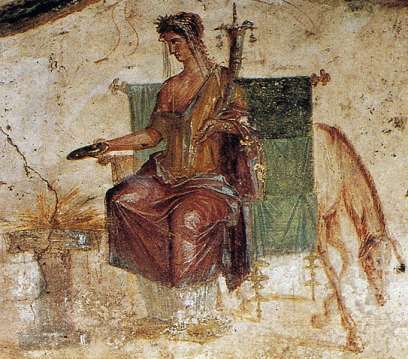
- Make your home a sacred space. Hestia felt at peace in her home and knew its value in keeping her filled with energy. So you hate housework? Make it more enjoyable by doing it as a meditation to Hestia.
- Learn to listen actively, to not allow yourself to be drawn automatically into arguing. You can always say something like, “It’s obvious this is important to you, and you probably have an important point. However I need to think about it to see if we can’t come to an agreement.”
- No matter how busy you might be, set aside some time each day to connect with someone you care about. Take just a few minutes to give them your full attention and some quiet appreciation. You’ll find yourself a much more loving and desirable person.
- Don’t be afraid to speak your mind and let everyone else know what you need and want. Hestia got what she wanted by speaking out.
- Say “no” when you really don’t want to be accommodating or go out of your way to please someone else. This way you can say “yes” with enthusiasm at other times and really mean it.
- Adorn yourself with an amethyst, Hestia’s symbol gemstone, to call forth her soothing energy. Or carry a raw crystal with you and hold it occasionally to help you recenter and rebalance.
Other Goddesses
We hope you enjoyed this post. Be sure to get to know some of the other goddesses we also write about. You can find the complete list of goddesses sorted across regions and religions here.
Featured Image Credit: Via Wikimedia Commons


