
Atalanta’s name means “unswayable,” and she certainly lived up to it . . . Atalanta was a girl with attitude!
She was born to a father who was hoping for a son and put the infant Atalanta out in the forest where she was raised by one of Artemis‘ she-bears. But eventually, she reappeared in his life, bearing no grudge against him.
Always Unconventional
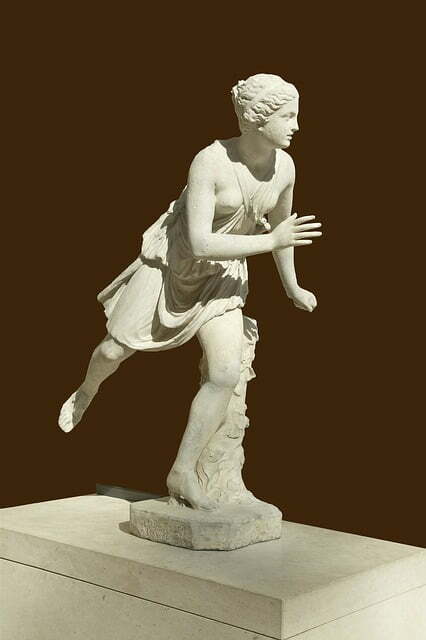
Atalanta never seemed to fall into the trap of “buying into” trying to win approval or fit into any conventional mold. She stood ready to defend her personal values and was perfectly capable of doing so.
Saying her polite goodbyes, she left home at an early age to see the world before settling down… if she ever decided to settle down, that is.
One thing was certain, no one else would be doing her decisions for her. Not now, not ever! The home was fine, but there was simply too much out there to see and do to get stuck in one place for too long.
Atalanta’s Adventures
Atalanta was one of the warrior heroines, those who were known for their fierce independence, competitiveness, and physical skills. She became famous as an adventurer, the only woman to join the band of heroes accompanying Jason.
Sailing to distant countries to capture the Golden Fleece and bring it safely back to Greece, she was on a quest that entailed considerable danger as they faced numerous tests and perils along the way.
Atalanta was a marvelous huntress. Expert with her bow and arrow, she was sometimes included as “just one of the boys” in various sporting events.
The Calydonian Boar
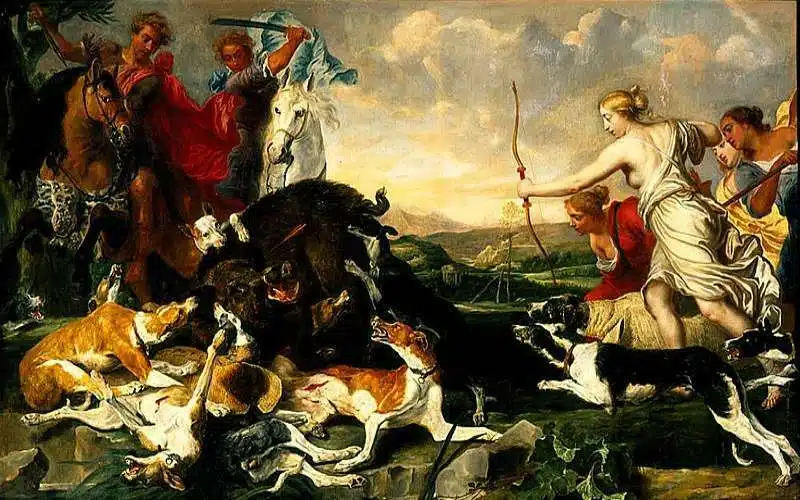
The most famous of these exploits was the Hunt for the Calydonian Boar. In retaliation for some affront against her by the king of Calydon, Artemis had loosed her gigantic, foul-tempered boar in the kingdom to wreak havoc throughout the countryside.
And wreak havoc he did, trampling all the crops, gobbling up all the livestock, and making the residents fearful of leaving the safety of their houses. Several talented hunters had been employed to kill the beast but had failed miserably, losing their own lives.
Eventually, the king had the clever idea of advertising a hunting competition that would attract all the great hunters; surely, having them all there simultaneously and the boar vastly outnumbered would tilt the odds in his favor.
Since the boar’s rampages had already brought the kingdom close to bankruptcy, the winner’s prize would be humble (just the boar’s pelt and elephant-size tusks), but the fame and glory that went to the one who killed the beast, not to mention the undying gratitude of the people, would be enormous.
The Hunt Begins
As it happened, Meleager, the king’s son who would be joining in the hunt that day, was taken with Atalanta and invited her to join the men. Although he was already married, he was quite smitten with her, attracted both by her beauty and her prowess.
The other men, however, weren’t very happy to have a woman included in the hunt. As it turned out, they were lucky to have her there. The men’s initial clumsy moves did nothing but enrage the boar and resulted in injuries to several in the party.
Just when the boar had two of them penned down and was ready to charge, Atalanta stepped up to the boar, looked him straight in the eyes, and managed to get off the perfect shot, stunning him and “saving their bacon.” Meleager rushed in with his javelin and killed the stunned pig, becoming the hero of the hunt.
Whether motivated by his infatuation with the young huntress or in genuine appreciation for her critical role in felling the boar, Meleager did the right thing and affirmed that it had been Atalanta’s first blow that had allowed him the victory. He insisted that she should have the pelt and that he would keep the tusks.
Never mind that she had literally saved them from becoming pig-feed, the chauvinists in the party were sore losers and protested the pelt being given to a woman. (This led to a fight between the men and, eventually, led to the death of Meleager — but let’s get back to the story of Atalanta.)
Time To Get Married
By this time, Atalanta was becoming quite a celebrity, known for both her beauty and her bravery. There were plenty of men seeking her hand in marriage, though she swore to remain single until she was ready to marry and vowed to pick her own husband, thank you very much!
Her father, the king, finally put his foot down and insisted she marry, but she negotiated a compromise. She agreed to willingly marry any man who could outrun her in a race, and she would even handicap herself by giving him a head start and by running while she was weighted down by her heavy sword.
Hoping to dissuade men from even applying for the privilege of competing with her, she added one stipulation – that she would behead the hapless unarmed suitor if and when she passed him in the race. So the stakes for a man were very high indeed!
The Race
Atalanta was so lovely and even-tempered that countless young nobles signed up to race for her anyway. Atalanta determined to make her own choices about who and when she would wed, ran like the wind. Her long golden hair waving in the breeze behind her. Many men perished in the race against her.
But one young man, Hippomenes, thought that the suitors were fools to risk their lives. At least that’s what he thought until Atalanta approached the starting blocks in her appropriate but scanty running togs. Now he too was enamored. However since he was more of a thinker than an athlete, he knew he’d never stand a chance of winning.
A smart lad, though, he pleaded his case with Aphrodite, the Goddess of Love, and asked for her help. Aphrodite was a bit miffed with Atalanta anyway since she’d always seemed so reluctant to fall in love. So she was more than happy to oblige.
Three Golden Apples For The Win
Aphrodite gave Hippomenes three golden, magical apples she picked from her garden and instructed him to toss them in Atalanta’s path when she drew close to him in the race. This he did, and each time Atalanta was intrigued by the radiant objects and slowed down to scoop them up.
In some versions of the story, the handsome young man so greatly impressed Atalanta that she intentionally let him win. When he collapsed in exhaustion after being the first to cross the finish line, Atalanta helped him up. Telling him and the spectators that she was glad he’d won.
They walked hand in hand with the king, who married them. He later gave them a large herd of valuable horses as a wedding present. Atalanta and her husband then traveled to his country, where great celebrations were held to welcome them.
“Have you tried the Goddess Quiz yet? Are you an Artemis goddess archetype, or maybe you are more like Demeter? Find out now!”
The Unfortunate Oversight
With all that they had to do, the newlyweds overlooked something important. They forgot to pay homage to one of the gods or goddesses. In one account, it was Zeus, the mighty king of the Olympians.
In another (and saucier) version, there was not even a brief thank-you note sent to Aphrodite for her role. Aphrodite was miffed by their neglect and decided to play a prank on them. Her little prank was inflaming them with an insatiable desire for each other.
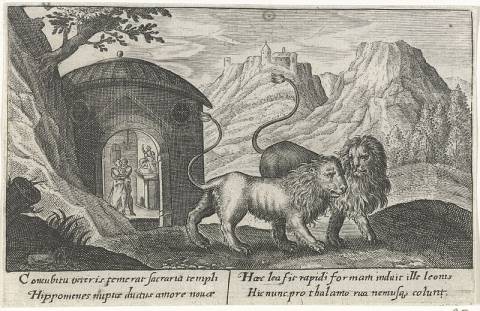
Unfortunately, the trick got out of hand, and they made mad, passionate love right in the middle of a temple. Rhea, the goddess whose temple they had profaned, was furious. She persuaded Zeus to turn them into lions, which she yoked to pull her chariot.
Zeus, recognizing the greatness of their love for each other, showed compassion and turned them into a constellation of stars. Known today as the Leonids, thus allowing the couple to remain together, racing through the heavens side by side forever.
Atalanta’s Symbols
Atalanta is often represented by symbols associated with her breathtaking independence. It’s hardly surprising that many of our cultural symbols of feminine cleverness and willpower are derived from the ancient goddess symbols of Atalanta.
General
Atalanta’s love story began with an unusual race that involved three magical golden apples. This is why the golden apples became a symbol of this goddess.
Her other symbols are bow and arrow, spear, and wind.
Animals
When Atalanta was born, she was cruelly rejected by her father and left outside in the woods to perish. However, one of Artemis’ she-bears took pity on a poor baby girl, so she raised Atalanta as her own. That’s why one of Atalanta’s most common animal symbols is a she-bear.
Other animals that can symbolize Atalanta are lions, boars and pigs, and horses.
Plants
It doesn’t have to be golden; it can be a regular one: an apple is one of the most common plant symbols for Atalanta. Other plants that can symbolize this goddess are rhododendron, geranium, carnation, dandelion, juniper, birch, and oak tree.
Perfumes/Scents
Atalanta loved adventure, and she would certainly love some unusual and somewhat adventurous perfumes and scents, such as orange, rosemary, lime, mulberry, eucalyptus, carnation, and jasmine.
Gems and Metals
Gold, amber, opal, tiger’s eye, topaz, peridot, steel, iron, tin, ivory, and yellow jade are some of the gems and precious metals that symbolize Atalanta.
Goddess Jewelry
There are many reasons why you might want to keep a healing crystal or stone close to you. Getting closer to your goddess by wearing her color or crystal is a great one. That they also look great as jewelry only makes it so much better!
Here is a guide to crystal jewelry you hopefully will find helpful. In it is a list of 30+ crystals and links to some really great looking jewelry with that crystal or stone. Enjoy!
Colors
Atalanta is usually symbolized with magenta, crimson red, orange, maroon, and dark blue.
Embracing the Call of Atalanta: Recognizing Her Presence and Cultivating a Sacred Connection
Do you feel a strong affinity for athleticism, competition, and the natural world? If so, Greek goddess Atalanta might be reaching out to you. Learn how to discern her call, invoke her essence, and develop a meaningful bond with this formidable deity.
How to know if Atalanta is calling you
Atalanta’s call often comes through athletic pursuits. A sudden passion for sports, running, or physical challenges might signal her presence. Watch for animals, like bears or lions, as she may use them to communicate.
Additionally, dreams and visions featuring Atalanta or symbols related to her, like foot races or archery, could be significant. Keep an eye out for imagery of swift-footed female warriors or competitors.
Finally, notice any synchronicities in your life. Repeated encounters with Atalanta’s symbols, or an intense fascination with her stories and mythology, may suggest that she’s reaching out to you.
Invoking Atalanta
To invoke Atalanta, choose a location surrounded by nature or create an indoor space inspired by the great outdoors. Incorporate her symbols, such as athletic imagery, bows and arrows, or images of the goddess herself, to forge a connection.
During your ritual, light candles, preferably gold or green, to represent her strength and connection to nature. Offer symbols of Atalanta, like flowers, tokens, or written intentions, as a sign of your dedication and reverence.
In meditation, focus on your breath and clear your mind. Envision Atalanta, her symbols, and the energy she represents. Silently request her guidance and remain receptive to any insights arising during your meditation.
Signs that Atalanta is present
Identifying when Atalanta is with you is crucial to deepening your bond with her. The goddess often reveals herself through various emotional, physical, or visual signs. Here are six ways to recognize her presence:
- Emotional sensations: Feeling inspired, empowered, or courageous can signify her nearness.
- Physical reactions: Sudden warmth, energy surges, or heightened senses may indicate her presence.
- Visual cues: Flashes of gold light, swift movements, or glimpses of her symbols can be hints.
- Auditory cues: Hearing distant cheers, the sound of running footsteps, or animal calls could suggest her presence.
- Nature occurrences: Encounters with powerful animals, particularly bears or lions, might be a sign.
- Intuitive connection: An inexplicable sense that Atalanta is with you can be evidence of her presence.
Cultivating a relationship with Atalanta
To deepen your connection with Atalanta, maintain a consistent practice of meditation, prayer, or ritual in her honor. Offer tokens of appreciation regularly, like during athletic events or moments of personal triumph, to show your commitment.
Embody her values by pursuing physical fitness, self-reliance, and determination in your life. Respect and protect nature and its creatures, as these are important to her. Aligning with her principles will strengthen your bond.
Lastly, delve into her mythology and history. Study Atalanta’s role in Greek mythology and connect with others who share your interest. Through shared insights and experiences, you’ll gain a more profound understanding of the goddess and fortify your connection with her.
Other Goddesses
We hope you enjoyed this post. BE sure to check out some of the other goddesses we also write about. You can find the complete list of goddesses sorted across regions and religions here.
Featured Image Credit: Jan Fyt, Public domain, via Wikimedia Commons

,_RP-P-OB-15.962.jpg)
