
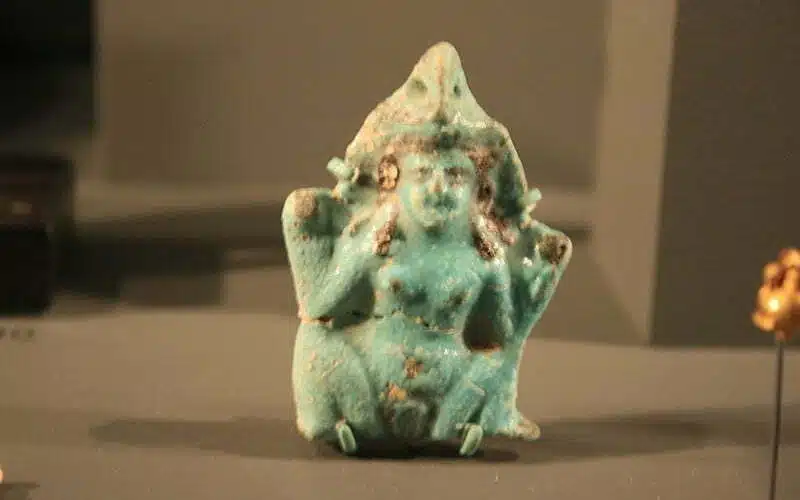
The goddess Baubo: Who is this mystery woman? She is Baubo, a fun-loving, bawdy, jesting, sexually liberated, yet very wise goddess who plays a crucial, healing role in the Eleusian mysteries of ancient Greece.
She remains a much-honored figure today among many women—celebrated as a positive force of female sexuality and the healing power of laughter. Her power and energy have survived in the spirits of women down through the centuries.
What we Know About Baubo
Because of the scarcity of written references and the contradictory nature of the writings that we do have, she is a mysterious figure in many ways.
Much of the mystery surrounding the goddess Baubo arises from literary connections between her name and the names of other goddesses. Baubo is sometimes referred to as the goddess Iambe, the daughter of Pan and Echo, described in the legends of Homer.
Her identity eventually blended with those of earlier goddesses, such mother/vegetation goddesses as Atargatis, a goddess originating in northern Syria, and Kybele (or Cybele), a goddess from Asia Minor. To avoid confusion, we shall refer to her simply as Baubo in the rest of this article.
Scholars have traced the origin of Baubo to very ancient times in the Mediterranean region, particularly in western Syria. Goddess of vegetation, her later appearance as a servant in the myths of Demeter mark the transition to an agrarian culture where the power has now shifted to Demeter, the Greek goddess of grain and the harvest.
Baubo And Demeter
This brings us to the wonderful story in which Baubo and Demeter meet up, as told in the Eleusian mysteries. Baubo is best known in this story, where she appears as a middle-aged servant to King Celeus of Eleusis.
According to the myths, Demeter was wandering the Earth in deep mourning over the loss of her beloved daughter, Persephone, who had been violently abducted by Hades, the god of the underworld. Abandoning her goddess duties of bringing fertility to the land, she took refuge in the city of Eleusis. The disheartened goddess, disguised as an old woman, was welcomed into the king’s home.
Everyone in the king’s household tried to console and lift the spirits of the severely depressed woman, but to no avail—until Baubo showed up. The two women started chatting, with Baubo making several humorous, risqué remarks. Demeter began to smile. Then, Baubo suddenly lifted her skirt in front of Demeter.
Different versions of this tale provide very different images of what Demeter saw under Baubo’s skirt, but whatever she saw, it finally lifted her out of her depression. She responded with a long and hearty belly laugh!
Ultimately, with her spirits and confidence restored, Demeter persuaded Zeus to command Hades to release Persephone. So, thanks to the lewd antics of Baubo, all was once again right in the world.
The Meaning Of Baubo’s Name
This inspiring story from the Eleusian mysteries suggests the meaning of Baubo’s name. Her name, according to many interpretations, means “belly,” indicating the belly laughter that she provoked in Demeter.
According to other interpretations, however, Baubo’s name means “old crone.” Although “crone” has rather negative connotations to us today, the word was originally used to refer to a wise, mature woman.
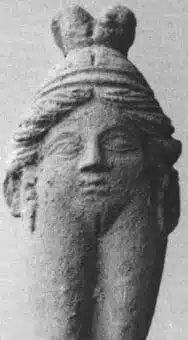
The “belly” interpretation of Baubo’s name is revealed in some ancient figurines of the goddess that have been found in Asia Minor and elsewhere. These sacred objects depict Baubo’s face in her belly, with her vulva forming her chin.
Other unearthed figurines of Baubo depict her playfully exposing an exaggerated vulva between her legs.
Baubo’s Role In Sacred Greek Festivals
Baubo appeared as Demeter’s “sacred fool” in ancient Greece’s annual festival of women. At this festival, initiates were taught the profound lessons of living joyfully, dying without fear, and being an integral part of the great cycles of nature—lessons that are at the heart of the Eleusian mysteries.
As the initiates carried sacrificial piglets across a bridge, a gallus (castrated priest) portraying Baubo encouraged them to join him in making lewd comments and gestures (including lifting his skirt) to the assembled crowd. The precise meaning of this lesson to the initiates has been lost in the mists of time.
However, it undoubtedly had great significance at this festival, celebrating the power and sacredness of women. Unfortunately, its meaning is all too easy to misinterpret as simple vulgarity in our modern society.
Baubo And Orphic Mysteries
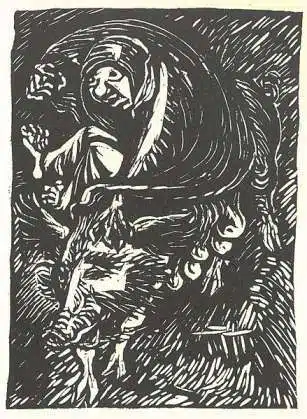
Some of what we know of Baubo comes from the pen of Clement of Alexandria. Clement was a Greek Christian writer of anti-pagan rants in the second century of the Common Era. However, his diatribes often contained revealing information about pagan beliefs—mainly in his misinterpretations of the pagan Orphic mysteries of ancient Greece.
The Orphic mysteries reveal that Baubo was married to a swine herder. That doesn’t sound like much today, but it was considered quite a lucrative occupation in ancient times. Baubo also had a son named Eumolpos, who is described as a “sweet singer.” The high order of priests officiating at the festival of the Eleusian mysteries claimed descent from Eumolpos. High priestesses participating in this festival did as well.

“Have you tried the Goddess Quiz yet? Are you an Artemis goddess archetype, or maybe you are more like Demeter? Find out now!”
Was Baubo a Transgender?
From the ambiguous nature of the surviving information about Baubo, some scholars have concluded she was perhaps a hermaphrodite. Possibly transgendered in some other way. According to some interpretations of Clement’s writings, Baubo, when she lifted her skirt to Demeter, revealed body parts “inappropriate to a woman.”
The possibility that Baubo may have had male or male-like genitalia has been suggested as the main reason that Demeter suddenly became happy upon seeing this sight. In ancient times, hermaphroditism had profound religious significance.
It represented the unification of seemingly opposite and irreconcilable things. Whether those things were male and female or life and death. For Demeter, a woman who was worried that her daughter might be dead, this realization would have been extremely comforting.
The story of Baubo and Demeter can still serve as a great comfort for us. Some women who belong to pagan groups today, for example, might join together to appeal to Baubo. Asking for the gift of laughter, fun, friendship, and spiritual healing for instance. In addition, certain Wiccan rituals celebrating the diversity of the gay/lesbian/bisexual/transgender community invoke the name and spirit of Baubo.
Baubo Symbols
Baubo has a small but significant role in greek mythology, being able to cheer up Demeter and bring her out of her depressed state. As a result, Demeter was finally able to get back to her duties, and the earth was fertile and abundant with crops again!
General
Since rowdy humor and indecent exposure were how Baubo made Demeter laugh, her most common symbol is a vulva. Many sculptures and figurines depict Baubo as lifting her skirt and exposing her genitals.
With this in mind, other Baubo symbols are laughter, lyre, comedy, humor, and jokes.
Animals
Sometimes, Baubo is depicted as a naked woman with her legs widely spread apart while she holds a harp on the back of a boar. That’s why the boar could be a good animal symbol of Baubo.
Since this goddess wasn’t often mentioned, and specifically not in relation to other animals, the boar remains her only animal symbol.
Plants
Since the vulva is the most common symbol for Baubo, plants and flowers that resemble vulvas could also be used to represent this goddess. This includes poppy flowers, Venus flytraps, Clitoria ternatea (vagina plant), and various orchids, tulips, and lilies.
Perfumes/Scents
Geranium is a flower that symbolizes silliness and fun, so its scent is a perfect symbol of Baubo. Other scents and perfume notes that go well with Baubo are citrus, pumpkin, and lavender.
Gems and Metals
Crazy Lace Agate is a gemstone often called “Laughter stone” and “Happy lace.” It is believed to absorb mental pain and bring emotional joy and happiness to those who wear it. This is why this gemstone is a perfect symbol of Baubo, as she also helped Demeter deal with her pain and made her happy again.
Other gems that can symbolize Baubo are Amazonite, Amethyst, Citrine, Rose Quartz, and Black Tourmaline.
Goddess Jewelry
There are many reasons why you might want to keep a healing crystal or stone close to you. Getting closer to your goddess by wearing her color or crystal is a great one. That they also look great as jewelry only makes it so much better!
Here is a guide to crystal jewelry you hopefully will find helpful. In it is a list of 30+ crystals and links to some really great looking jewelry with that crystal or stone. Enjoy!
Colors
Since she was a goddess of happiness, laughter, joy, and obscene humor, Baubo is best represented with bright colors, such as yellow, green orange, red, violet, and turquoise.
Embracing Baubo’s Playful Spirit: Connecting with the Goddess of Laughter and Joy
Have you ever felt drawn to laughter, joy, and the power of humor to heal? The goddess Baubo may be inviting you to connect with her playful energy. Discover how to recognize her call, invoke her presence, and cultivate a meaningful relationship with this captivating Greek goddess.
How to know if Baubo is calling you
Baubo’s presence may be felt through laughter and humor. Pay attention to situations where you find yourself laughing more often or encountering playful jokes. Additionally, feelings of joy and light-heartedness can be signs that Baubo is near.
Dreams and visions featuring Baubo, her symbols, or elements of humor may also indicate her call. Be mindful of any recurring themes of laughter or joy in your dreams and visions.
Finally, notice any synchronicities in your life, such as repeated encounters with humor or a strong attraction to stories of joy and healing. These patterns might not be mere coincidences and could signal Baubo’s presence.
Invoking Baubo
To call upon Baubo, create a space that celebrates humor and laughter. Incorporate her symbols, such as figurines or images of her, to help establish a connection with the goddess.
Light candles in warm, inviting colors, such as orange or yellow, to represent joy and laughter. Offer symbols of happiness, tokens, or even written intentions to Baubo, showing your dedication and respect for her.
During meditation, focus on your breath and clear your mind. Visualize Baubo and the energy she represents. Silently ask for her guidance and be open to any insights that may arise during your meditation.
Signs that Baubo is present
Identifying when Baubo is near is crucial to deepening your connection with her. The goddess often reveals her presence in various ways, from emotional sensations to visual cues. Here are six signs that can help you recognize when Baubo is present:
- Emotional sensations: Feelings of joy, lightheartedness, or amusement can indicate her presence.
- Physical reactions: Warmth or tingling sensations may signal she’s near.
- Visual cues: Flashes of bright colors, laughter, or glimpses of her symbols can be signs.
- Auditory cues: Hearing laughter, giggling, or joyful sounds may suggest her presence.
- Social occurrences: Encountering humor or playful situations can be a signal.
- Intuitive connection: A strong sense that Baubo is with you, even if you can’t pinpoint why, can be a sign of her presence.
Cultivating a relationship with Baubo
To build a deeper connection with Baubo, establish a consistent practice of meditation, prayer, or ritual to honor her. Regularly engage in activities that bring joy and laughter, demonstrating your commitment to the goddess.
Embrace her values by cultivating humor and lightheartedness in your life. Encourage laughter and joy in your interactions with others, as these aspects are central to her being. Aligning your life with her principles will help deepen your connection to her.
Lastly, study her mythology and history. Read about Baubo and her place in Greek mythology, and connect with others who share your interest. By exchanging insights and experiences, you’ll develop a richer understanding of the goddess and strengthen your bond with her.
Lessons To Learn From Baubo
Of course, you don’t have to be a follower of pagan beliefs to discover the joyful mirth of Baubo.
The goddess Baubo is always there to remind us to let our hair down and have fun. She tells us to be proud of, to flaunt occasionally, and to be empowered by our femininity and sexuality. And Baubo reminds us to be sure to let out a good belly laugh now and then!
After all, laughter is one of our greatest gifts from the Goddess!
Other Goddesses
We hope you enjoyed this post. Be sure to check out some of the other goddesses we also write about. You can find the complete list of goddesses sorted across regions and religions here.
Featured Image Credit: Gary Todd from Xinzheng, CC0, via Wikimedia Commons


.jpg)